2026-05-18
Rhinoplasty Surgery: Key Features and Considerations Based on Patient Reviews
Rhinoplasty is a complex procedure due to the nose's central facial position, where even minor asymmetries are noticeable. Success depends not only on external shape but also on internal structures like deviated septums and the harmony of soft tissue, cartilage, and bone. Curved nose correction offers high satisfaction but requires expertise, while bulbous nose surgery may have limitations based on skin thickness, requiring realistic expectations. Minimizing revision surgery and complications re

Hello, this is VIBE Plastic Surgery :)
During consultations, many people search for various
rhinoplasty reviews before visiting us.
Some come after checking results through actual reviews beforehand,
or come with questions about rhinoplasty
organized in advance. However,
rhinoplasty is more delicate and complex
than expected, so
making decisions based solely on before/after photos or reviews
rather than understanding the surgery's characteristics and important considerations
is crucial.
Today, I'll explain why rhinoplasty is a challenging surgery
and what to look for when reviewing rhinoplasty cases
to help guide your decision💜
Is Rhinoplasty a Difficult Surgery?

Rhinoplasty requires more complexity than many realize.
The nose is located at the center of the face, so even slight misalignment
or asymmetry becomes immediately noticeable.
Many people search for various rhinoplasty reviews before considering surgery,
📍External aspects
Nasal bridge line, height, and overall balance
📍Internal structure
Structural issues inside the nose such as deviated septum
When a deviated septum (where the nasal septum is curved, causing asymmetry)
is present, the surgery isn't simply about changing the shape—
we must also correct the curvature while performing the procedure.
Additionally, rhinoplasty involves ✨soft tissue, cartilage, and bone,
and the harmonious surgical technique and balance of these three structures
are critical, so thorough consultation and careful planning are essential.
Do Many People Undergo Rhinoplasty Revision Surgery?

Most rhinoplasty procedures result in satisfactory outcomes
that are completed with a single surgery.
However, some people choose revision surgery
👃🏻for various reasons.
Many people search for different rhinoplasty reviews before consultation, and when reviewing actual patient cases,
the reasons for considering revision surgery are quite varied.
📍Reasons for considering revision surgery
☑️ When surgery results don't match the patient's expectations
☑️ When complications like inflammation or infection occur
☑️ When the nasal tip appears lifted or asymmetrical
As you can see from rhinoplasty reviews,
revision surgery is determined by various causes.
Thorough consultation and careful planning from the initial surgery
are crucial to reduce the need for revision. ✨
How Can We Minimize Complications from Rhinoplasty?

Problems that may arise after rhinoplasty can be divided into two categories:
surgical factors and patient factors. When reviewing actual rhinoplasty cases,
you can see that results vary based on surgical planning and individual nasal structure.
📍Surgical factors
When creating the nasal tip, we can use septal cartilage, ear cartilage, or rib cartilage.
If we forcefully increase the tip height without considering the patient's soft tissue
or nasal structure, the tip can become curved or collapse.
📍Patient factors
Since each patient's skin thickness, soft tissue, and nasal structure are different,
the same surgical method can produce different results. Therefore,
a surgical plan tailored to the individual's conditions
and thorough consultation are absolutely necessary. :)
📍Hygiene management
It's crucial to maintain sterile conditions during surgery.
Following basic hygiene protocols like wearing gloves and hand sanitization,
and performing surgery cleanly and safely
helps reduce 🩸inflammation.
Which Nasal Types Are Most Challenging to Correct?

Surgical difficulty and patient satisfaction can vary depending on nasal condition.
When reviewing actual rhinoplasty cases, you'll notice that satisfaction levels
differ based on nasal shape and individual conditions.
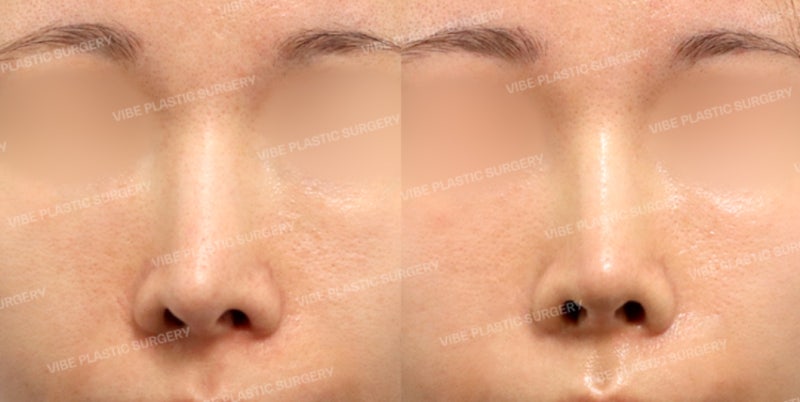
📍Curved nose correction surgery
When the nose is curved in an S-shape or tilted to one side,
straightening the center produces dramatic external changes,
resulting in high patient satisfaction. Additionally, functional breathing difficulties
often improve simultaneously, which is why rhinoplasty reviews
typically show high satisfaction. However, this is equally
a very challenging surgery.
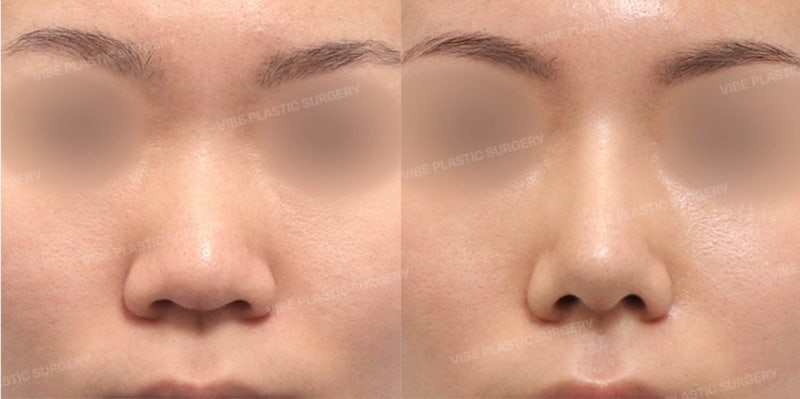
📍Bulbous nose surgery
Bulbous nose surgery often involves thick skin and excess fat,
which can limit the surgical results.
While volume decreases and shape improves when comparing before and after,
some patients may feel the nose didn't become as small
as they hoped.
In rhinoplasty reviews, managing expectations is
emphasized as an important factor.
What's Most Important for Satisfying Rhinoplasty Results?
Rhinoplasty isn't simply about changing the height or shape of the nose—
it requires careful consideration of each individual's nasal structure,
facial balance, and functional aspects.
So even when reviewing various rhinoplasty cases,
results can differ based on surgical methods and individual conditions.
At VIBE Plastic Surgery, after thoroughly analyzing the patient's nasal structure
and facial proportions, we create a personalized rhinoplasty plan.
"The nose is the center of the face."
Since even small changes can alter your entire appearance,
careful consultation and accurate surgical planning are essential.
If you're considering rhinoplasty, we encourage you to explore
various rhinoplasty reviews along with professional consultation
to find the nasal line that's right for you. :)
*Please refer to the video below for detailed explanations :)




Frequently Asked Questions
Why is rhinoplasty such a difficult surgery?
Because the nose is located at the center of the face, even minor misalignment is immediately noticeable. Not only must we consider the external nasal bridge line and height, but also internal structural issues like deviated septum. The harmonious surgical technique and balance of soft tissue, cartilage, and bone are essential.
Why do people undergo revision rhinoplasty?
Revision is typically considered when results don't match the patient's expectations or complications develop. Specifically, when inflammation, infection, or other issues occur, or when the nasal tip appears lifted or asymmetrical, patients may choose revision. Thorough consultation and careful planning from the start are crucial.
How can I minimize complications from rhinoplasty?
A personalized plan considering both surgical and patient factors is essential. The nasal tip must be designed carefully based on the patient's soft tissue and nasal structure without forcing excessive height. Maintaining sterile conditions and following basic hygiene protocols like wearing gloves and hand sanitization also help reduce inflammation.
Is curved nose correction surgery typically satisfying?
Yes, it generally achieves high satisfaction. Correcting the center of an S-curved or tilted nose produces dramatic external changes, and breathing difficulties often improve simultaneously, which is why patient reviews show high satisfaction. However, it is equally a very challenging surgery requiring expertise.
What should I know about bulbous nose surgery?
Bulbous nose often involves thick skin and excess fat, which can limit surgical results. While volume decreases and shape improves compared to before surgery, patients may feel the nose didn't become as small as expected. Managing expectations is emphasized in patient reviews as an important consideration.
What materials are used for nasal tip surgery?
We can use septal cartilage, ear cartilage, or rib cartilage. However, if we forcefully increase the tip height without considering the patient's soft tissue and nasal structure, the tip can become curved or collapse. Careful planning tailored to individual conditions is necessary.