2026-05-18
Snuplastic Surgery | Do I Have Ptosis? A Must-Read Before Surgery
Many Koreans self-diagnose with ptosis, but it's often a misunderstanding caused by anatomical differences or changing aesthetic standards. Accurate diagnosis requires objective indicators like MDR1, pupil exposure, and fatigue response. Unnecessary surgery can cause serious side effects including overcorrection and lagophthalmos, making professional consultation essential before any decision.

Hello.
Snuplastic Surgery in Cheongdam.
Today, we're discussing a common topic in plastic surgery
that many people misunderstand:
'Ptosis'—drooping eyelids.

With growing interest in beauty and cosmetics,
many people believe they have ptosis
and are seeking surgical consultation.
Especially among Koreans and Korean-diaspora individuals,
"my eyes have ptosis" is a self-diagnosis that's common,
with many considering corrective surgery.
But is this really the case?
# Why Do Koreans Think They Have Ptosis?
Compared to other ethnicities,
East Asians, including Koreans,
tend to self-diagnose with ptosis
more frequently.
The reasons are twofold:
1. Anatomical Differences
East Asians typically have relatively weaker levator muscles
or more fat and tissue in the eyelids themselves,
resulting in more eyelid coverage.
This makes the pupils appear less exposed,
leading to the misconception of ptosis.
2. Changing Aesthetic Standards
While past focus was on the presence or absence of a double eyelid crease,
recent trends emphasize asymmetrical or drooping eyes,
making people more aware of their eye-opening habits
and minor differences seem like major issues.
# The MDR1 Standard: Difficult to Understand Without Professional Training
One of the key objective indicators for diagnosing ptosis
is MDR1
(Margin Reflex Distance 1).
This measures the distance from the upper eyelid margin
to the center of the pupil,
with 3.5–4.5 mm typically considered normal.
However, MDR1 is difficult to measure accurately without
specialized equipment or professional expertise.
So in my clinical practice, I explain it this way:
When you open your eyes comfortably
(even using your forehead muscles somewhat),
if your pupil is exposed 80–90%
between the upper and lower eyelids,
clinically significant ptosis is unlikely.
(For men, 60–70% or more exposure is often considered normal.)
Of course, this is just a reference guideline,
and professional consultation is essential for accurate diagnosis.
# Are There Other Criteria to Consider?
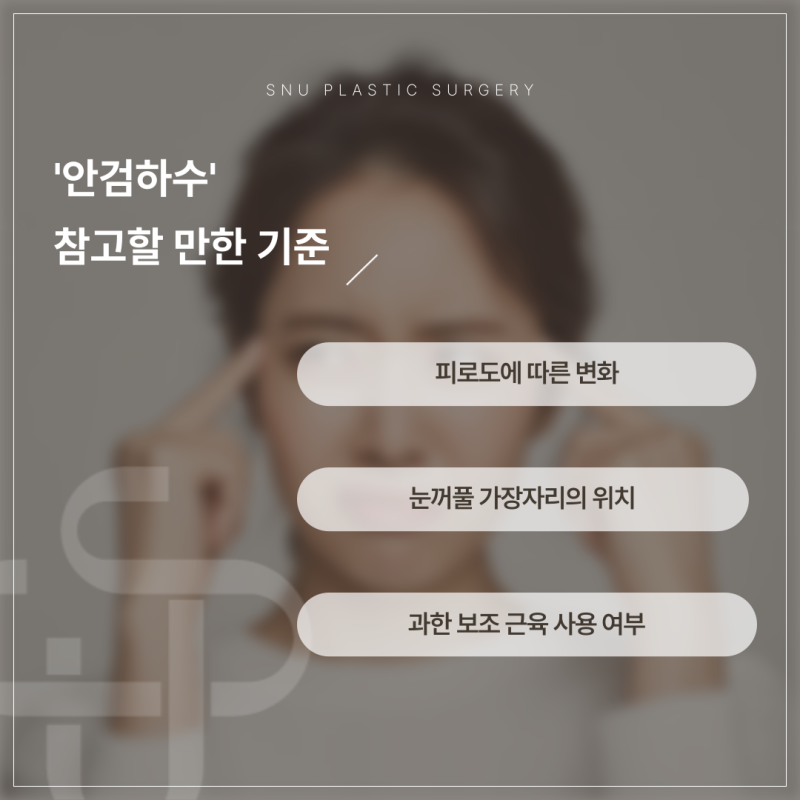
Beyond pupil exposure, I recommend these self-assessment criteria:
1. Changes Based on Fatigue Level
Your eyes open easily in the morning but droop more in the evening
or when you're tired
(fatigue-related drooping—this is usually NOT improved by surgery)
2. Upper Eyelid Margin Position
How much of the iris (colored part) is covered by the eyelid
(Typically, coverage of 1–2 mm is normal.)
3. Excessive Compensatory Muscle Use
When opening your eyes in front of a mirror,
notice if your forehead wrinkles deeply
or if you raise your chin to help open your eyes.
However,
since these are subjective observations,
if you're wondering "Do I have ptosis?",
seek proper consultation at a plastic surgery clinic
for accurate diagnosis.
# A Paradigm Shift in Understanding Eye-Opening Muscles
Historically, the eye-opening mechanism was thought to involve only
the levator palpebrae superioris and Müller's muscle in the eyelid.
The frontalis muscle was considered separate, functioning only to raise the eyebrow,
and only compensating when ptosis occurs.
However, recent research has expanded this understanding.
Eye-opening patterns vary by individual and ethnicity.
- Westerners typically open their eyes primarily using the levator palpebrae superioris.
- Conversely, East Asians or certain individuals may
naturally or through habit
use the frontalis muscle to raise the eyebrow
as part of their normal eye-opening mechanism,
not just as compensation.
👉🏻 In other words, using your forehead muscles
does not automatically mean you have ptosis!
It's simply a difference in anatomy and eye-opening habits.
# Being Obsessed With Surgery When You Don't Have Ptosis Can Be Unwise
This is the most crucial point.
Based on the criteria mentioned earlier
(MDR1, pupil exposure, fatigue response, etc.),
if you don't have actual ptosis,
you should be cautious about pursuing surgery
based on self-diagnosis alone.
Ptosis correction surgery is meaningful for those who need it,
as it restores visual field,
but for those who don't need it,
it can result in overcorrection.
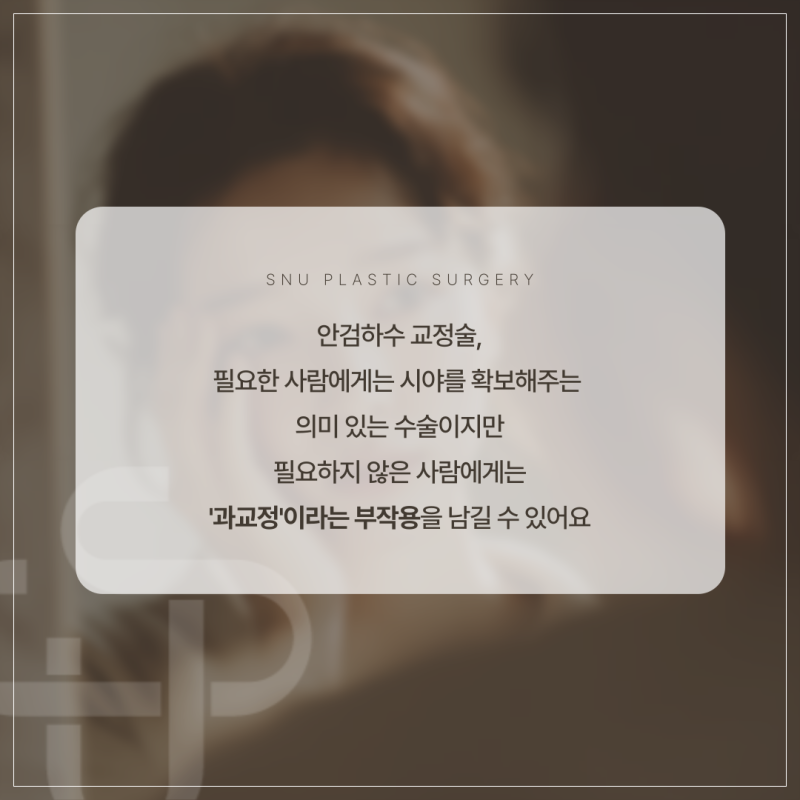
Overcorrection leads to incomplete eyelid closure
(lagophthalmos),
excessively wide-eyed appearance,
foreign body sensation, and dry eye syndrome,
which can worsen significantly.
Additionally, if you naturally use your forehead muscles,
surgery may result in an unnatural appearance.
Making a surgical decision without accurately understanding your eyes
based on a psychological fixation with drooping eyes
is a decision you may regret.
The key is not "doing the surgery you want,"
but "having the surgery when it's medically necessary and properly diagnosed."
If you're reading this and wondering:
Do I have ptosis? Should I get ptosis correction along with a double eyelid surgery?
I encourage you to reconsider the points discussed today.

In front of a mirror, relax your forehead and open your eyes naturally.
If your pupils are exposed 80–90%
(or 60–70% or more for men)
your eyes are likely already attractive enough.
True ptosis is accompanied by visual discomfort.
Embrace your eyes as they are,
and think carefully about the risks of unnecessary surgery complications.
If you have questions
or need a proper diagnosis,
trust professional consultation,
not word-of-mouth reviews,
and make an informed decision.
Website
📌 KakaoTalk Channel (Click the image below to visit)


#ptosis #ptosis self-diagnosis #ptosis correction surgery #double eyelid surgery #Asian eyelid surgery #eyelid surgery consultation #forehead muscle #MDR1 #ptosis side effects
Frequently Asked Questions
Why Do Koreans Think They Have Ptosis?
East Asians typically have weaker levator muscles or more eyelid tissue compared to Westerners, resulting in less pupil exposure. Additionally, with increased aesthetic sensitivity to asymmetrical or drooping eyes, many East Asians mistakenly self-diagnose with ptosis.
What Is MDR1 and What Is the Normal Range?
MDR1 (Margin Reflex Distance 1) measures the distance from the upper eyelid margin to the pupil center, with 3.5–4.5 mm typically considered normal. However, accurate measurement requires specialized equipment or professional expertise, making it difficult for individuals to self-measure.
Can I Self-Diagnose Ptosis at Home?
When your eyes are relaxed, if your pupils show 80–90% exposure between the upper and lower eyelids, clinically significant ptosis is unlikely. Men often have 60–70% or more exposure and still be normal, but professional consultation is essential for accurate diagnosis.
If I Use My Forehead Muscles to Open My Eyes, Do I Definitely Have Ptosis?
No. Recent research shows that East Asians or certain individuals naturally or habitually use their forehead muscles as part of their normal eye-opening mechanism, not just as compensation. This reflects anatomical and habitual differences and does not necessarily indicate ptosis.
What Side Effects Can Occur If I Have Surgery Without Having Ptosis?
Unnecessary surgery can lead to overcorrection, causing lagophthalmos (inability to close the eyelids completely), an excessively wide-eyed appearance, foreign body sensation, and worsening dry eye syndrome. Your eyes may also look unnatural after surgery.
If My Eyelids Droop When I'm Tired, Can Ptosis Surgery Fix It?
Fatigue-related eyelid drooping—when your eyes open normally in the morning but droop in the evening or when tired—is usually not improved by surgery. Therefore, it's best to seek proper professional consultation for accurate diagnosis rather than self-diagnose.