2026-05-18
Complete Guide to Under-Eye Fat Repositioning Surgery and Lower Eyelid Blepharoplasty
Under-eye fat repositioning surgery varies in technique based on skin laxity. Younger patients undergo transconjunctival approach to remove or reposition fat without visible scarring, while those with skin sagging have excess skin trimmed through external incision. The procedure progresses in stages as needed—including fat grafting, fat pad lift, and muscle lift—to improve dark circles and tired-looking appearance.

What is Under-Eye Fat Repositioning?

#Under-eye fat repositioning is,
#under-eye fat removal, #under-eye dark circles,
#under-eye wrinkle removal, #lower eyelid surgery, and more—
there are various terms for this procedure.
Under-eye fat repositioning surgery varies in technique between those with skin sagging and those without.
These are the types of patients who undergo this surgery.
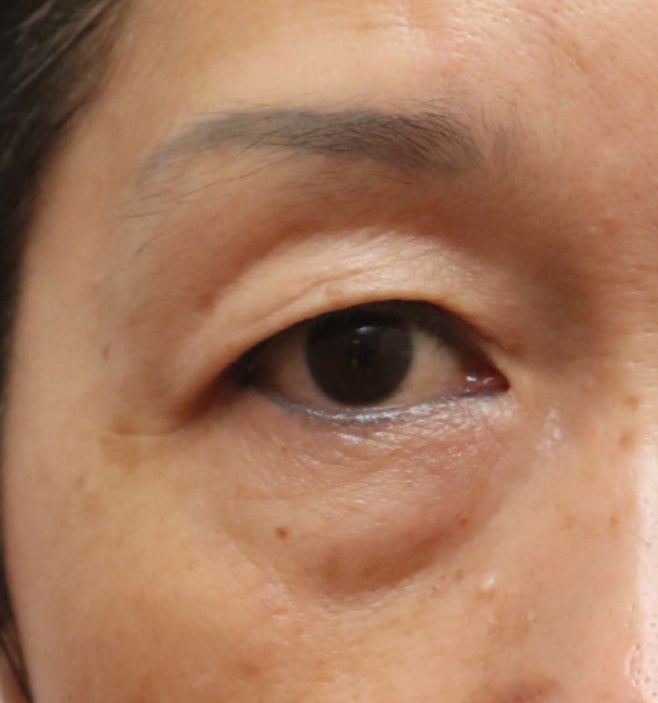
1) No Skin Laxity (Younger Patients)
When there is no skin sagging (typically younger patients), the surgery is performed through the conjunctiva.
Transconjunctival surgery leaves no visible scars and typically involves only fat removal.
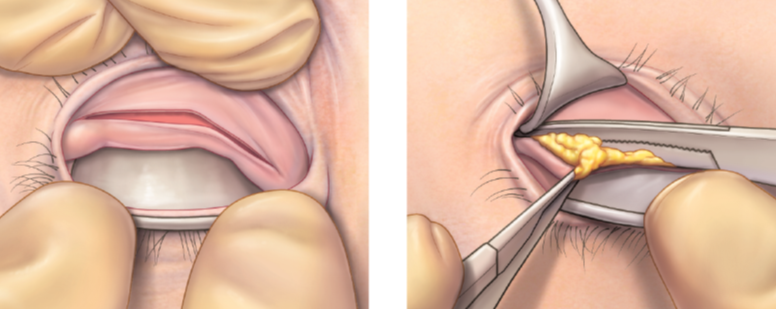
Under-eye fat repositioning through simple fat removal
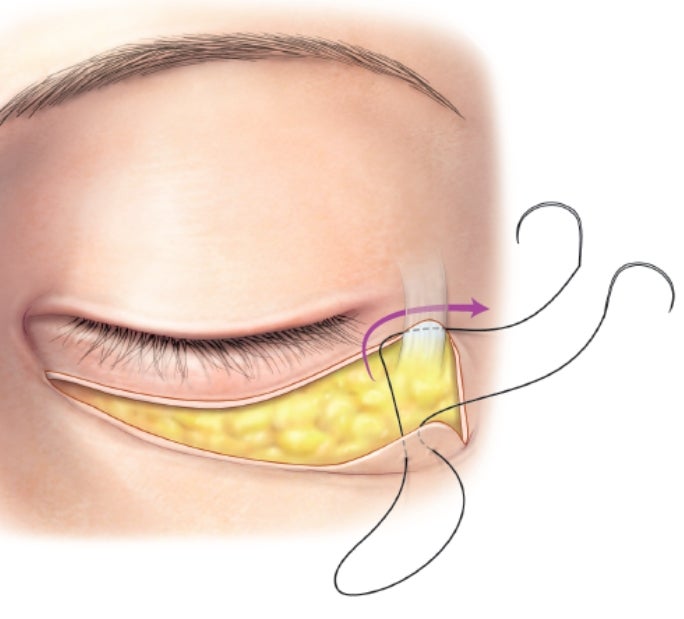
While some cases involve only fat removal, when the fat appears defined or bulging, the fat can be repositioned. When necessary, in cases where fat has depleted, fat grafting is also performed.
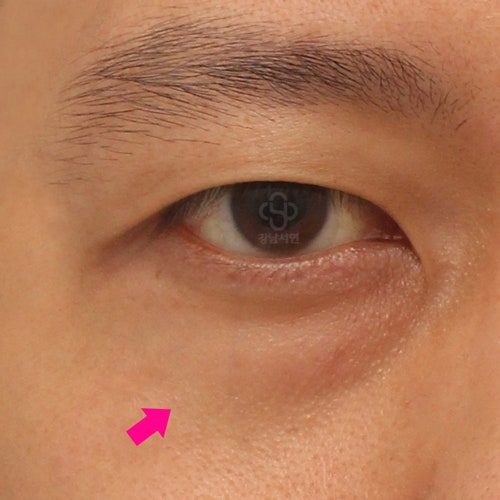
The area marked by the arrow shows where the tear trough ligament is released for fat repositioning.
By releasing the tear trough ligament, the defined fat edges are released and the fat is properly repositioned.
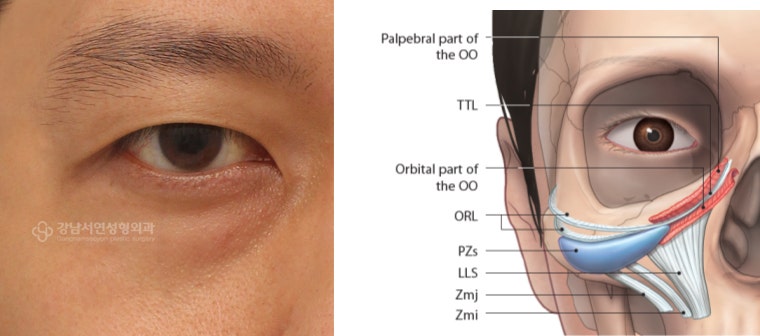
Under-eye fat can make one appear older, and sometimes pigmentation creates severe #dark circles.
Under-eye fat can also make the area appear puffy, painful, or constantly tired-looking.
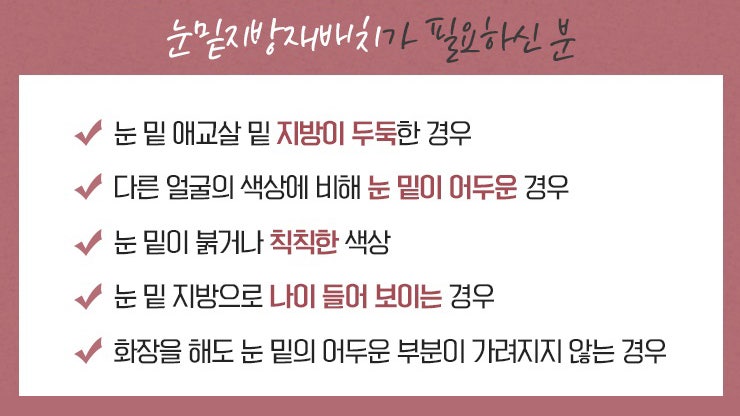
2) With Skin Laxity—When Only Fat Protrudes
When skin is sagging and fat is simply protruding, the fat is repositioned or removed, and excess skin is trimmed and closed with sutures.
The surgery is simpler in these cases. However, in cases where fat protrudes while lower hollowing appears severe, after under-eye fat repositioning, fat grafting is sometimes combined, and the fat pad beneath the orbicularis oculi muscle can be lifted (SOOF lift—a component of mid-face lift).
In summary, under-eye fat repositioning requires staged surgical planning.
Stage 1: Fat Repositioning
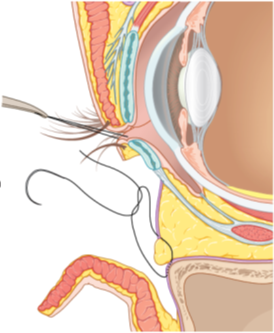
Stage 2: Fat Pad Lift
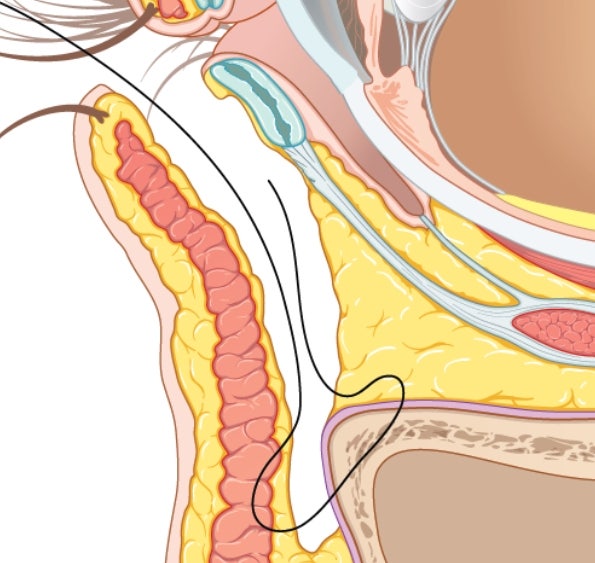
Stage 3: Muscle Lift
Surgical Limitations
Even with external incisions, scars fade over time and become less noticeable. Existing under-eye fullness is preserved as much as possible.
However, if pre-existing fullness was asymmetrical, or if there was no fullness to begin with, asymmetry may persist. Fine lines also remain.
Over-resection of skin can cause the eyelid to appear everted, requiring careful technique. Excessive scarring or nerve damage can worsen eversion, making precision surgery essential.
Therefore, surgery should be performed by an experienced plastic surgeon.
Surgery typically takes about one hour, taking no more than 90 minutes even in complex cases.
Initial swelling subsides within 1-2 weeks, and scars become nearly imperceptible.
Under-eye fat repositioning (dark circle) surgery costs vary: transconjunctival approach ranges from approximately 1,000,000 to 2,000,000 KRW, while external incision surgery ranges from 1,200,000 to 3,500,000 KRW depending on the hospital and additional procedures.
.jpg?type=w800)
.jpg?type=w800)
.jpg?type=w800)
.jpg?type=w800)
Frequently Asked Questions
How long does under-eye fat repositioning surgery take?
Surgery typically takes about one hour, taking no more than 90 minutes even in cases with additional procedures like fat grafting or fat pad lift depending on skin laxity.
What is the swelling and recovery timeline after surgery?
Initial swelling usually resolves within 1-2 weeks. Transconjunctival surgery leaves no visible scars, and external incision scars become nearly imperceptible over time.
What is the difference between under-eye fat repositioning and lower eyelid surgery?
The technique depends on skin laxity. Younger patients without skin sagging undergo transconjunctival fat removal or repositioning, while those with skin laxity require external eyelid incision to trim and close excess skin.
How much does under-eye fat repositioning surgery cost?
Costs vary by hospital. Transconjunctival surgery ranges from approximately 1,000,000 to 2,000,000 KRW, while external incision surgery ranges from 1,200,000 to 3,500,000 KRW. Additional procedures and hospital choice affect the final cost.
What are the stages of under-eye fat repositioning surgery?
There are three stages: Stage 1 is fat repositioning, Stage 2 is fat pad lift (SOOF lift), and Stage 3 is muscle lift. The procedure advances through the necessary stages based on individual patient needs.
Are there any side effects or precautions after surgery?
Over-resection of skin can cause eyelid eversion, requiring careful technique. Excessive scarring or nerve damage can worsen symptoms, so surgery by an experienced plastic surgeon is essential for safety.