2026-05-18
When to Release Eye Lift Correction and Timing for Levator Recession Surgery (Overcorrection = Retracted Eyes)
After eye lift surgery, when the upper eyelid is excessively elevated and resembles a surprised rabbit eye, this condition is called overcorrection or retracted eyes. Normal eyes have the upper eyelid covering the pupil by approximately 1.5-2mm; if it rises beyond this, correction is needed. Within one month after surgery, eye correction release can resolve the issue, but after one month passes, complex levator recession surgery that requires separation of the conjunctiva and Müller's muscle bec
With a desire for clearer, sharper eyes,
Or perhaps you had eye lift surgery after your clinic recommended it.
Your eyes look bigger and more awake...
But something feels off—excessively wide-eyed?
Many people hear they look like a surprised rabbit.
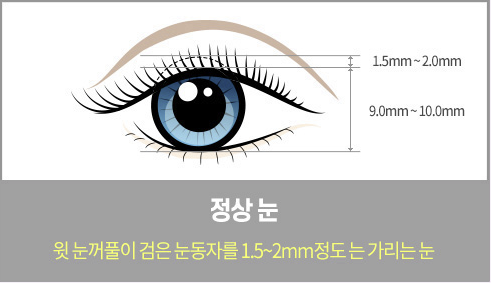
In normal eyes, the upper eyelid
covers the pupil by approximately 1.5-2mm.
However, when the upper eyelid rises higher than normal
and appears excessively elevated, we call this overcorrection.
Overcorrection is also known as retracted eyes.
Many people often misunderstand
what "retraction" means when they hear it.
To clarify:
"Retracted" refers to excessively widened eyes.
So what are the options for treating
overcorrected (retracted) eyes?
First, if it's within one month of your eye lift surgery,
the problem can be resolved through eye correction release.
If more than one month has passed, you'll need levator recession surgery
(blepharoptosis correction) for correction.
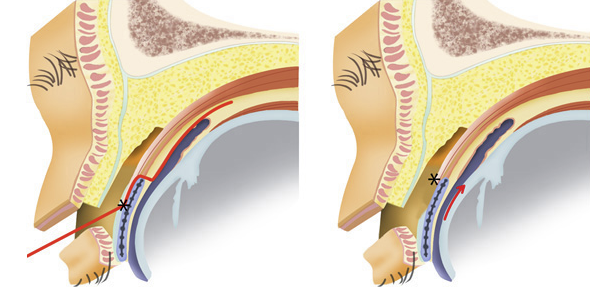
Levator recession surgery is a complex procedure that requires repositioning
the levator muscle while carefully separating the conjunctiva and Müller's muscle
(the smooth muscle attached to the conjunctiva).
To correct the problem as quickly as possible,
it's best to visit within one month of your eye lift surgery
to treat the overcorrection.
However, some patients come after having adhesions released
at another clinic.
This is not the same as levator recession surgery. Simply removing
sutures does not correct blepharoptosis.
Blepharoptosis correction involves several variables.
Sometimes the eyes appear fine right after surgery,
but 2-3 weeks later they become overly widened again.
In such cases, early correction is needed.
This occurs because under anesthesia during surgery the eyes appear smaller,
making the correction appear successful, but with time
it becomes clear the correction was insufficient.
It must be frustrating to undergo surgery only to need
early correction again.
To prevent this situation, it's crucial
to have surgery performed by an experienced plastic surgeon.

Dr. Choi Dong-il at Gangnam Seoyeon Plastic Surgery is a board-certified
plastic surgeon with over 20 years of experience who performs
meticulous and precise surgery to create natural-looking eyes.
Finally, we'll conclude by sharing before-and-after photos
of eye correction release.
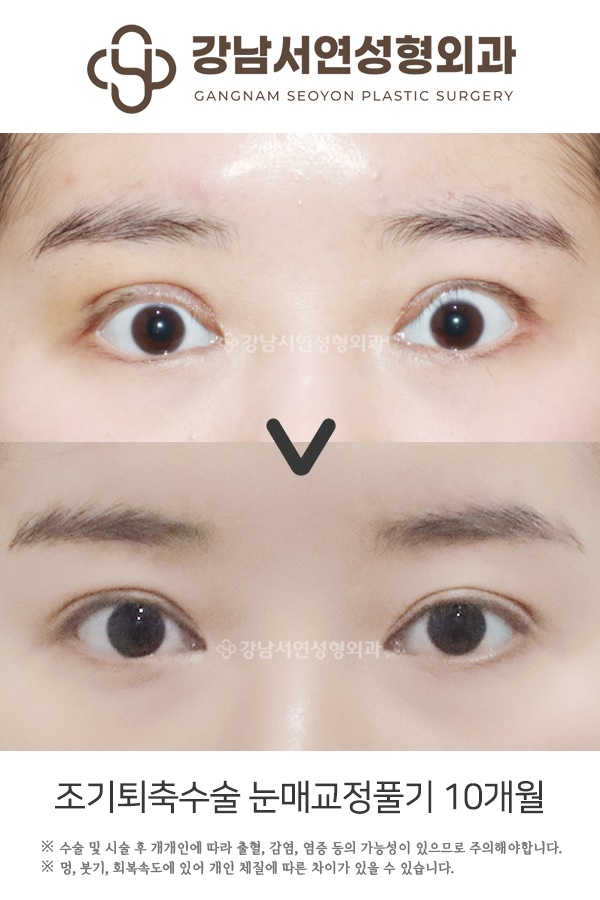
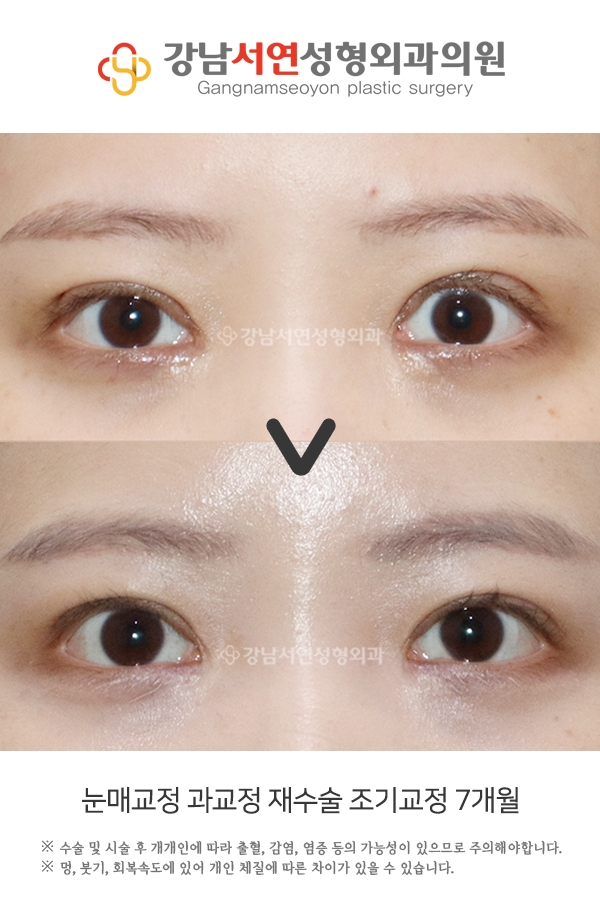
Gangnam Seoyeon Plastic Surgery complies with medical law. The photos in this post were taken under identical conditions with prior patient consent. Additionally, complications such as bleeding, infection, and inflammation may occur following cosmetic surgery and procedures depending on the individual, so caution is advised.
- Single Board-Certified Plastic Surgeon Director System - Precise eye assessment /Recommending only necessary procedures - Operating room CCTV equipped |
Feel free to visit us and receive a 1:1 consultation with our plastic surgeon :)
If you have any questions or wish to schedule a consultation, please leave a comment,
contact us via KakaoTalk Plus Friend @Gangnam Seoyeon Plastic Surgery,
or call 02-535-8889 :)


#GangnamSeoyeonPlasticSurgery #GangnamSeoyeon #SeoyeonPlasticSurgery #GangnamSeoyeonPlasticSurgeryClinic #LevatorRecessionSurgery #Retraction #Blepharoptosis #OverwideneEyes #RabbitEyes #Overcorrection #Undercorrection #Asymmetry #EyeLiftSurgery #EyeLiftSideEffects #EyeCorrection #EyeLiftReview #EyeCorrectionReview #LevatorRecessionReview #PlasticSurgery #PlasticSurgeryReview #EarlyCorrection #EyeCorrectionRelease #EyeCorrectionReleaseReview #RetractedEyes
Frequently Asked Questions
When is eye correction release possible?
It's possible within one month after eye lift surgery. After one month, simply removing sutures won't solve the problem—you'll need levator recession surgery (blepharoptosis correction). For faster recovery, it's best to visit within one month if possible.
What exactly are retracted eyes?
It refers to when the upper eyelid is excessively elevated above normal. In normal eyes, the upper eyelid covers the pupil by about 1.5-2mm, but when it rises further due to overcorrection, it's called retracted eyes and typically looks like a 'surprised rabbit eye.'
Are releasing eye correction adhesions and levator recession surgery the same?
No, they're different. Simply removing sutures to release adhesions doesn't correct blepharoptosis. Levator recession surgery requires repositioning the levator muscle and separating the conjunctiva from Müller's muscle—a complex procedure.
Can eyes become overly widened again after levator recession surgery?
Yes, that can happen. If your eyes become overly widened again 2-3 weeks after surgery, early correction is necessary. This occurs because the surgery appeared successful under anesthesia, but the correction proved insufficient with time.
Why is levator recession surgery difficult?
It's a complex procedure requiring precise separation of the conjunctiva and Müller's muscle while repositioning the levator. Since multiple variables exist, having the surgery performed by an experienced plastic surgeon is important to reduce the risk of revision surgery.
What symptoms after eye lift surgery require a return visit?
You should return if your eyes appear excessively large or if you're told they look like 'surprised rabbit eyes.' The upper eyelid may have risen above normal, indicating overcorrection, which can be resolved relatively simply with eye correction release if within one month.